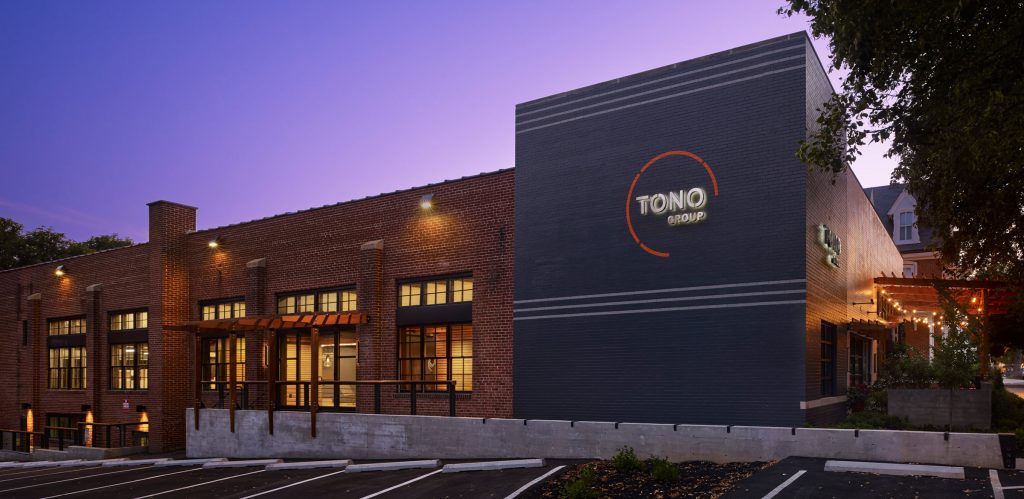
5 Advantages of Applying Lean Principles in Integrated Project Delivery
Commercial buildings are inherently interdisciplinary structures. Achieving high-performance outcomes and positive occupant experiences requires architectural design, construction, engineering systems, and interior design to work together cohesively. Yet many architecture and construction firms today operate from a hyper-specialized and fragmented approach to building development. This mindset stifles innovation and creativity, slows project timelines, and often results in unplanned costs and risks.
At TONO Group, we are transforming possibilities within the design-build process guided by the straightforward belief that collaboration creates superior outcomes.
From small-scale fit outs to expansive developments, our process is rooted in an Integrated Project Delivery (IPD) approach. The American Institute of Architects (AIA) defines IPD as a process that integrates people, systems, business structures, and practices to collaboratively harness the talents and insights of all participants.[i]
Our IPD process revolves around five integrated in-house family of businesses. These include real estate consultation (RELO), development (RETRO), architectural and interior design (TONO), construction (PROTO), and curated (FF&E) furniture, fixtures & equipment (DECO).
Every team works together using lean principles to guide their workflows, ensuring each project is optimized for value and quality. In practice, construction management, design, and engineering coordinate from day one to maintain alignment and momentum.
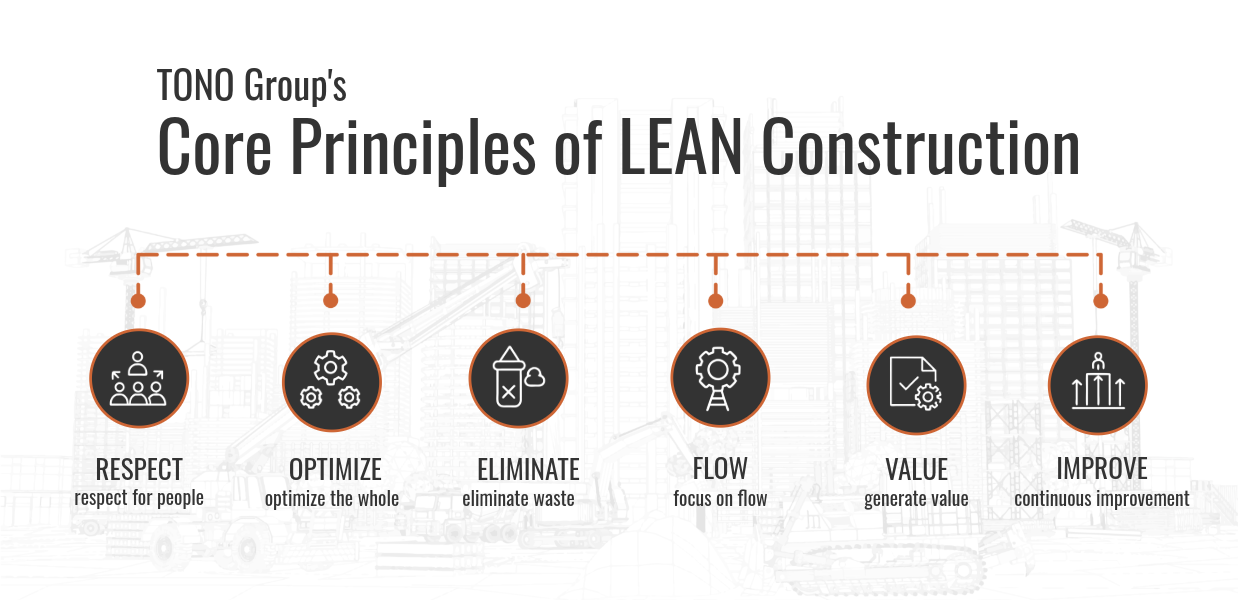
Enhancing IPD with Lean Principles
Lean principles in architecture and construction are developed around six guiding philosophies[ii]:
- Respect for people
- Optimize the whole
- Eliminate waste
- Focus on flow
- Generate value
- Continuous improvement
Implementing these philosophies into the Integrated project delivery process brings significant improvements throughout the entirety of a project’s lifespan. Improved collaboration ensures faster project delivery, better cost savings, and higher quality outcomes. Combined, this integrated approach delivers the ultimate outcome: meaningful client partnerships and truly inspired placemaking.
Here are five advantages of applying lean principles in integrative project delivery.
Improved Collaboration
For successful commercial building projects, it’s essential to involve the right experts from the start and keep them engaged through each phase.
Traditional construction management and project management approaches leave teams and stakeholders in silos. This fragmented process often means each team only begins work once the previous component is complete.
For example, construction leaders start their tasks after architectural planning is finished, and interior design comes into play once the building is done.
This often results in overlapping work, change orders, unexpected costs, and missed opportunities to enhance the project. A unified process breaks down these barriers and invites all teams to communicate and share their expertise holistically as they work toward a common goal.
This approach helped bring the vision for The Lititz Shirt Factory, a multi-level entertainment venue, to reality. TONO Group was selected to transform the abandoned 90,000-square-foot, historic warehouse into a modern, community gathering space. Working as an integrated entity, in tandem with the project’s proprietor, TONO Group provided consultation on real estate development while leading architectural design and construction.
By using a well-organized method, the project was successfully carried out to truly capture the owner’s vision of restoring and transforming the historic building.

Faster Project Delivery
Better collaboration leads to quicker decision-making and earlier issue resolution. The IPD process and lean principles ensure that all team members are aligned on expectations, tasks, and timelines. This can reduce and even eliminate rework, duplicate activities, and downtime that slow the progress of commercial building projects.
The Lean Construction Institute estimates that 70% of commercial building projects are completed past deadlines when traditional delivery methods are used. With interdisciplinary teams working together, information and expertise are shared early and throughout the process. Work is initiated in parallel to minimize disruptions, and issues can be identified sooner to prevent downtime.
This benefit was realized during the building transformation of Eye Check Health & Vision. The boutique optometry practice needed to embody the brand’s luxury retail experience while maintaining adequate workflows for patient care.
By providing a single-source experience that combined all areas of architecture, construction, and design, TONO Group was able to unburden the client from day-to-day project management and successfully complete the fit out within the constraints of a short deadline. The result is a distinctive environment where patients’ needs can be served in comfort and with warm reception.

Cost Savings
Lean construction practices are rooted in waste reduction. Teams can do more with less by optimizing resources and collaborating early across construction management and design disciplines. Centralized tools like Building Information Modeling (BIM) platforms provide transparency and allow teams to evaluate cost implications as decisions are made. This allows conflicts to be identified early, reducing costly change orders and preventing problems before they happen.
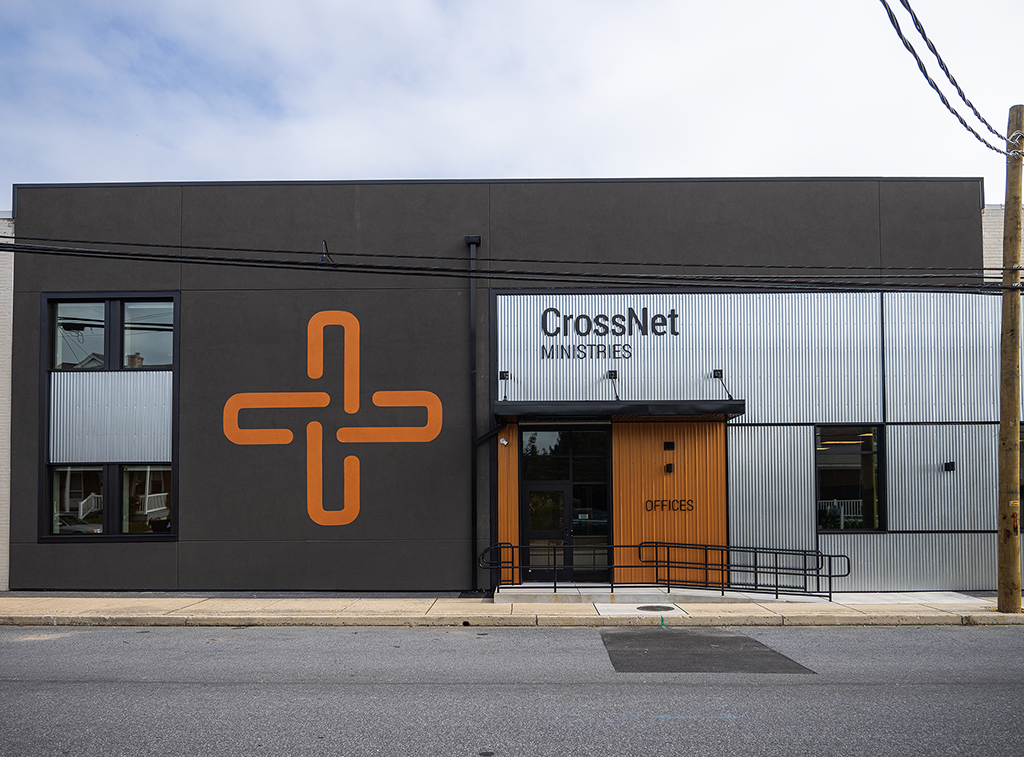
Recently, TONO Group worked with CrossNet Ministries, a non-profit organization that provides transitional housing, career counseling, youth programs, and resources for those facing food insecurity. Maintaining their budget was key to transforming a 27,000-square-foot former manufacturing warehouse into a meaningful space designed to meet the needs of the community. Using an IPD approach, TONO Group provided property evaluation, architectural design, construction, and interiors to drive value through every aspect of the project.
Higher Quality Outcomes
Ensuring high-quality outcomes depends as much on collaboration as it does on technical expertise. When lean practices are combined with an IPD process, they establish a framework where all stakeholders are engaged early and continuously throughout the lifespan of the project. This engagement fosters clear communication, transparency, and accountability to ensure that every decision is aligned with the objectives and goals of the project.
Through a structure of continuous feedback, teams contribute their expertise and actively participate in problem-solving. Challenges are addressed collaboratively using focused experimentation and iterative refinement. Instead of relying on siloed knowledge, the collective insight of the entire project team drives solutions that are both functionally accurate and meaningful.
Increased Client Satisfaction
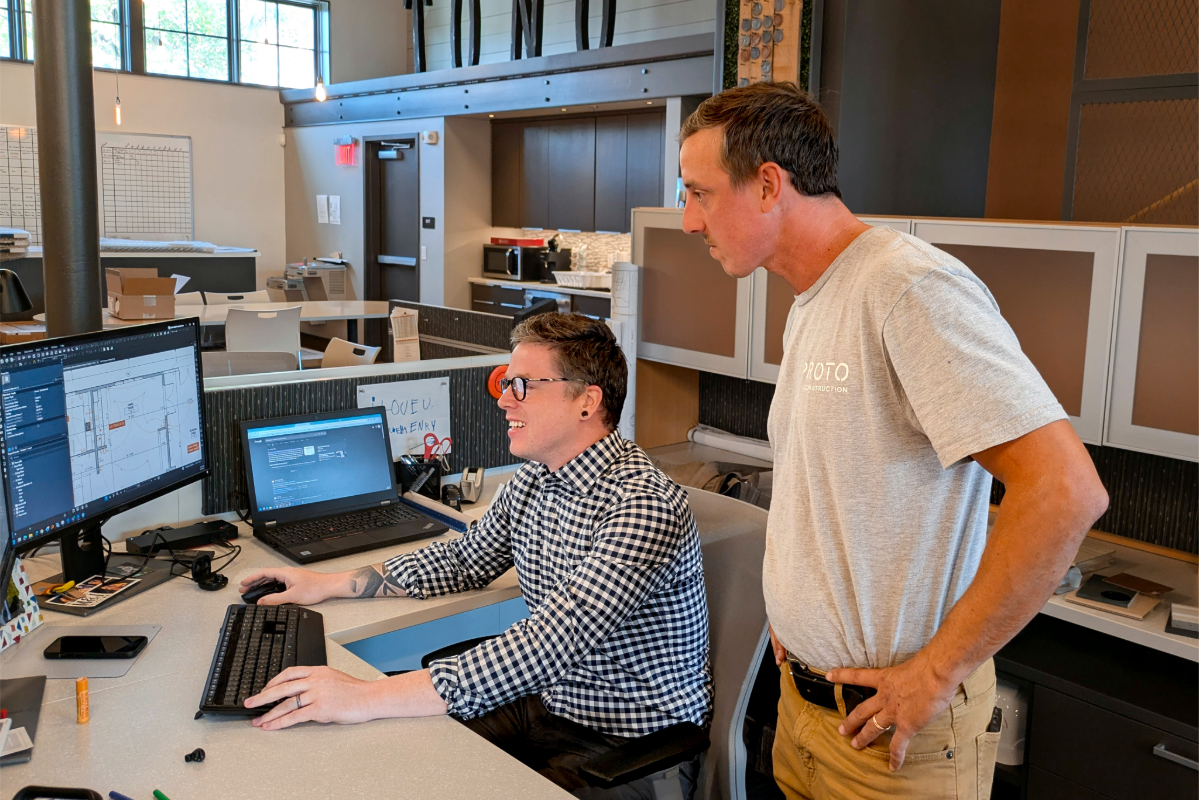
Occupant experience is central to a building’s value. Similarly, we believe that the client experience is central to a successful design-build project. Combining our interdisciplinary expertise with a framework of lean principles, we’ve engineered our IPD process to not only deliver inspired places but also enhance client relationships.
At TONO Group, we follow these practices because we believe it’s the right thing to do: clear and honest communication, maximized resources that maintain budgets, and innovative thinking that delivers your vision on time. We’re humbled by each opportunity to grow in partnership and develop buildings that elevate communities and neighborhoods around the country.
Through thoughtful practices, a strong reverence for place, and a people-first commitment, we’re on a mission to reimagine the built environment. And we can’t wait to learn about your vision. Contact us to start a conversation about your vision for your next project.
“TONO Group’s creative synergy among its architecture, engineering, and design teams resulted in a final product that exceeded my expectations,” said Jim Hoffer, Lititz Shirt Factory. “TONO struck the right balance between cost consciousness and refined restoration while never compromising the soul of this historic building.”
Frequently Asked Questions
What is Integrated Project Delivery (IPD) and how does TONO Group apply it?
The American Institute of Architects defines IPD as a process that integrates people, systems, business structures, and practices to collaboratively harness the talents and insights of all participants.
TONO Group implements Integrated Project Delivery (IPD) by coordinating five in-house businesses: real estate consultation (RELO), retrofitting (RETRO), comprehensive architectural solutions (TONO), construction (PROTO), and interior design (DECO). These teams collaborate from the project's beginning. Guided by lean principles, these teams coordinate holistically, so each project is optimized for value, timeline, and quality.
What lean principles guide TONO Group's process?
TONO Group applies six lean philosophies: respect for people, optimize the whole, eliminate waste, focus on flow, generate value, and continuous improvement. Embedded in integrated project delivery, these principles improve collaboration, accelerate delivery, reduce costs, and elevate quality, foster meaningful client partnerships, and inspire placemaking throughout a project's lifecycle.
How does early, integrated collaboration lead to faster project delivery?
By aligning expectations, tasks, and timelines across disciplines from day one, teams make quicker decisions and resolve issues earlier. Work streams can run in parallel instead of waiting on handoffs, which cuts rework, duplicate effort, and downtime.
How do LEAN with IPD practices reduce costs and risks?
LEAN emphasizes waste reduction and early collaboration to optimize resources. Tools such as BIM offer transparency. They allow teams to assess cost impacts when decisions are made and identify conflicts before they turn into change orders. This proactive approach prevents problems and protects budgets.
What do higher quality outcomes and increased client satisfaction look like in this model?
Quality rises when all stakeholders are engaged early and continuously, enabling clear communication, transparency, and accountability. With continuous feedback, teams co-create solutions through focused experimentation and iterative refinement, ensuring decisions align with project goals.
[i] American Institute of Architects (November 2023), “Integrated Product Delivery: A Guide”
[ii] Lean Construction Institute (2026), “Tenants of Lean”